- Future//Proof
- Posts
- 😱 AI just crossed from generation into scientific discovery
😱 AI just crossed from generation into scientific discovery
OpenAI’s reasoning breakthrough, Google’s synthetic media infrastructure, and Meta’s AI-first restructuring all point to the same future. 🤖

Avinash Mada
May 21, 2026
In partnership with

Welcome to the Future//Proof 🚀
👋 Hello , the AI Enthusiast.
In this week’s edition, we brought AI updates backed by high-quality research and data to give you deeper insights. You'll find the Top AI Breakthrough of the Week, a featured AI tool with a mini-tutorial, learning resources to help you master these tools, the top 3 AI news stories, and more.
Our goal is to help you improve your knowledge and stay ahead in the rapidly evolving AI landscape. You can submit your questions, queries, thoughts, opinions or anything regarding AI as a reply to this email and we'll feature and address them in our next newsletter.
🚀 Now Let’s dive in and explore the new AI Insights together!
⌛ Read Time: 5m:43s
Attio is the AI CRM for high-growth teams.
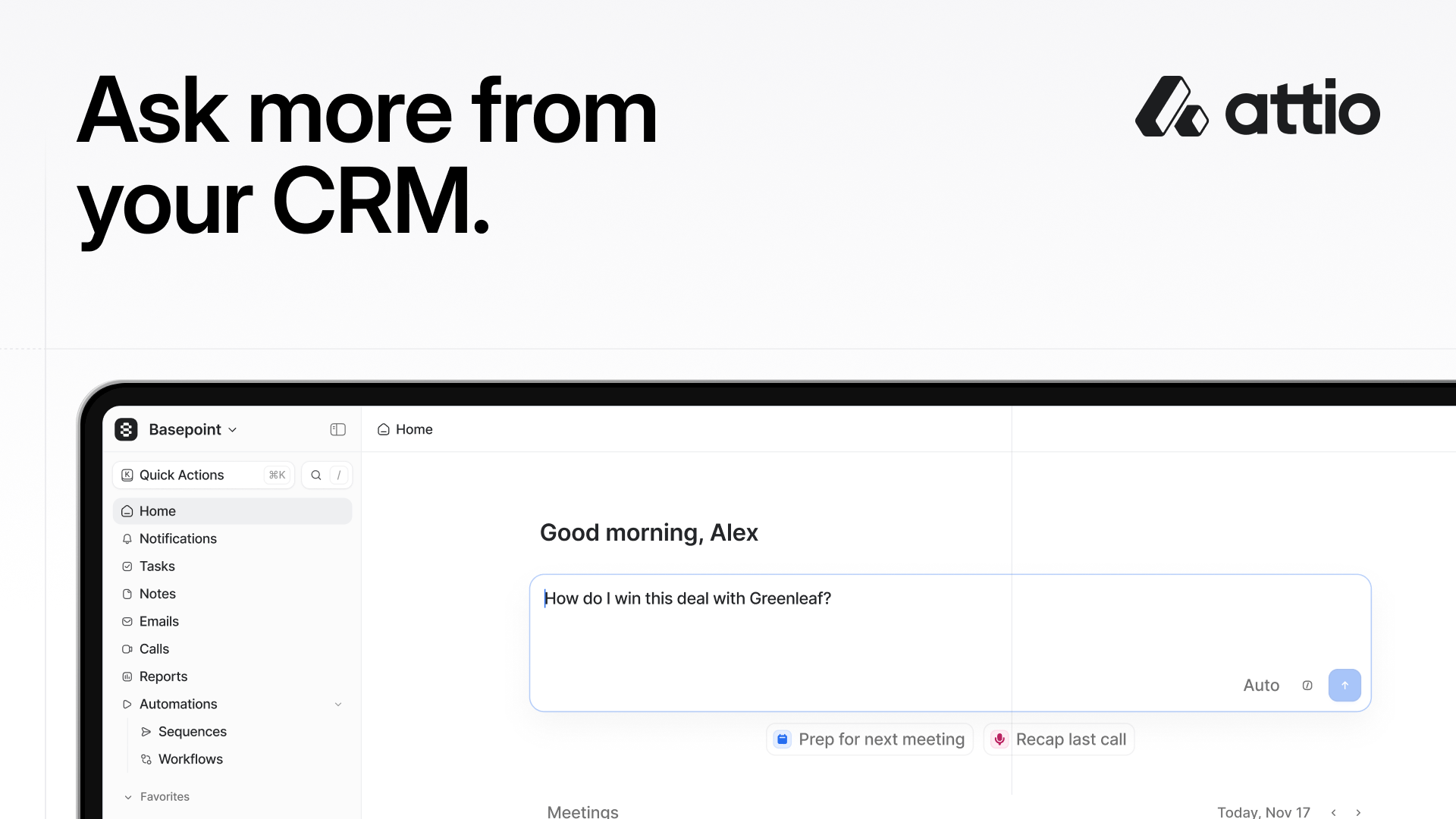
Connect your email, calls, product data and more, and Attio instantly builds your CRM with enriched data and complete context. Whether you’re running product-led growth or enterprise sales, Attio adapts to your unique GTM motion.
Then Ask Attio to plan your next move.
Run deep web research on prospects. Update your pipeline as you work. Find customers and draft outreach emails. Powered by Universal Context, Attio's intelligence layer, Attio searches, updates, and creates across your data to accelerate your workflow.
Ask more from your CRM.

An in-depth look at a major AI development, its industry impact, how it could affect your career, and a bold future prediction.

Gemini New Omni signals Google’s move to dominate the AI creator economy at scale
Google just collapsed the gap between reasoning models and creative software. Gemini Omni introduces a multimodal AI system that can generate and edit videos using text, images, audio, and existing video as input. The first release, Gemini Omni Flash, already supports conversational video editing with scene memory, object consistency, and physics retention — problems that most AI video tools still struggle to solve.
This is not another chatbot upgrade. Google is embedding Omni across the Gemini app, YouTube Shorts, and Google Flow, instantly placing advanced generative media tools inside products used by billions. The company says Nano Banana already generated over 50 billion images, giving Google one of the largest real-world creative AI feedback loops in existence.
The strategic shift matters more than the feature set. Google is turning AI from a response engine into a production engine. Search, video creation, editing, and distribution now sit inside one ecosystem.
Potential Impact
Gemini Omni could compress entire creative workflows from days into minutes.
High-leverage use cases include:
AI-generated ad creatives for brands and agencies
Instant cinematic content creation for creators and educators
Rapid prototyping for gaming, filmmaking, and product visualization
The biggest breakthrough is continuity. Omni maintains character consistency, scene logic, and conversational editing context across iterations — something that traditionally required teams of editors and VFX artists.
This moves generative AI from novelty clips into commercially usable media production.
Implications for People/Careers
Entry-level editing, motion graphics, thumbnail design, and short-form production roles now face direct pressure. Companies will not pay teams for repetitive creative execution when AI can generate iterations instantly.
Mid-level creators gain leverage if they learn prompting, narrative direction, AI-assisted editing, and distribution strategy. Senior operators who understand audience psychology, storytelling, and systems thinking become even more valuable.
The market will increasingly reward creative directors over manual executors.
People who only know tools will struggle. People who know taste, positioning, and outcomes will dominate.
Our Future//Take
This marks the beginning of “conversation-first creation.” Software interfaces will slowly disappear behind natural language workflows.
The winners over the next five years will not be the people making content manually. They will be the people orchestrating AI systems at scale across media, education, entertainment, and commerce.
Start learning:
AI-assisted storytelling
Prompt-driven production pipelines
Distribution and audience systems
Multimodal content strategy
Google is not competing for chatbot market share anymore. It is building the operating system for AI-native creativity.
this is quite basic I need you to act as an expert copywriter with 20 years of experience and write in a very advanced manner. No basic stuff. Write like a pure genius targeting genius readers who're industry experts. Don’t expand instead provide value adding data.Here’s your ₹25,000 AI Gift for FREE 🎁

Quick summaries of this week's top AI news, their relevance to your career, and our expert opinions.
Meta has begun another major restructuring cycle, cutting roughly 8,000 jobs while accelerating investment into AI infrastructure, custom chips, recommendation systems, and generative products across Facebook, Instagram, WhatsApp, and Horizon. The company already committed tens of billions toward AI compute expansion, including Nvidia GPU clusters and in-house silicon designed to reduce long-term inference costs.
The layoffs signal a deeper strategic shift: Meta now optimizes for AI-augmented output per employee rather than workforce scale. Internal tooling, ad systems, content moderation, customer support, and software development increasingly rely on automation layers powered by Meta AI and Llama models.
This matters because Meta operates one of the largest attention networks on earth with more than 3 billion daily active users across its ecosystem. Any productivity gain compounds globally. AI no longer sits inside the company as an experimental division. It now dictates organizational structure, capital allocation, and hiring logic.
Why It Matters to You
You now compete in markets where companies expect AI to absorb operational work that previously required teams. That changes the value equation overnight.
If your work depends on coordination, repetition, reporting, templated execution, or mid-level operational management, you sit directly in the automation layer. Companies will aggressively compress those functions.
Your leverage now comes from:
Decision quality
Distribution
Systems thinking
Taste
AI orchestration
Founders who integrate AI deeply will scale faster with smaller teams. Creators who build AI-assisted workflows will outproduce entire media companies. Professionals who only execute tasks will struggle to defend their value.
Our Take
This is not a cost-cutting cycle. It is an operating system transition.
Meta understands that the next dominant companies will not have the largest workforce. They will have the highest intelligence density per employee. AI allows firms to compound output without compounding payroll.
Expect every major tech company to follow the same pattern:
Smaller teams
Higher compute spend
Faster shipping cycles
Relentless automation of internal operations
You should already be redesigning your workflow around AI-native execution. Learn to manage systems, not tasks. The market will increasingly reward people who can direct intelligence at scale rather than manually produce outcomes themselves.
Google is repositioning Gemini from a general productivity model into a scientific reasoning system capable of accelerating research workflows across biology, chemistry, material science, and medicine. Gemini for Science combines multimodal reasoning, large-scale simulation support, literature synthesis, and hypothesis generation into one research stack designed for scientists rather than consumers.
The key shift lies in orchestration. Gemini can now process scientific papers, experimental datasets, molecular structures, lab notes, and simulation outputs simultaneously while proposing novel research directions. Google highlighted partnerships with leading research institutions and demonstrated systems capable of reducing months of exploratory analysis into hours.
This expands Google’s strategic position far beyond search or office software. Scientific discovery generates trillion-dollar downstream industries spanning pharmaceuticals, energy, defense, and advanced manufacturing. The company that becomes the default intelligence layer for research gains influence over the future innovation pipeline itself.
Google is no longer optimizing only for information retrieval. It is optimizing for discovery generation.
Why It Matters to You
The knowledge economy is entering a compression phase. AI now handles synthesis, cross-domain analysis, literature review, and pattern detection at scales impossible for individual researchers or small teams.
That changes how you build companies, products, and expertise.
If you work in biotech, health, education, climate, materials, or deep tech, your competitive advantage increasingly depends on how fast you can translate AI-assisted insight into execution. Teams using AI-native research workflows will move dramatically faster than traditional organizations built around manual analysis.
Your edge no longer comes from access to information.
It comes from how intelligently you navigate and operationalize it.
Our Take
This marks the beginning of AI-mediated science.
The next major breakthroughs in drug discovery, battery chemistry, genomics, and industrial materials will increasingly emerge from human researchers working alongside reasoning systems trained on global scientific knowledge.
Expect three outcomes:
Smaller research teams producing disproportionate breakthroughs
Faster commercialization cycles for deep tech startups
Increasing concentration of scientific leverage inside companies with compute and proprietary datasets
You should already be building AI literacy into your domain expertise. Researchers who ignore AI tooling risk becoming operationally obsolete within a few years.
The future scientist will look less like a specialist buried in papers and more like a systems architect directing machine intelligence toward discovery.
OpenAI claims one of its advanced reasoning systems solved a long-standing mathematical problem that remained unresolved for roughly eight decades, marking a major escalation in the race toward AI-assisted scientific discovery. Unlike standard benchmark demonstrations, this result allegedly emerged from iterative reasoning and proof exploration rather than pattern-matching against known internet data.
The breakthrough matters because frontier AI labs increasingly compete on cognitive capability, not chatbot adoption. Mathematical reasoning represents one of the hardest domains for generative models due to its demand for abstraction, logical consistency, symbolic manipulation, and multi-step inference. Success here signals progress toward systems capable of contributing to theoretical science, cryptography, physics, and advanced engineering.
The timing is strategic. OpenAI, Google DeepMind, Anthropic, and Meta now position reasoning models as intellectual infrastructure rather than consumer software. The market increasingly values models that generate original insight instead of polished language.
That changes the economics of expertise itself.
Why It Matters to You
You are entering a market where AI no longer just accelerates execution. It increasingly participates in high-level cognition.
That directly impacts how expertise compounds.
Founders who use AI for research, modeling, strategic simulation, and technical exploration will move faster than teams relying purely on human analysis. Professionals who only package existing knowledge lose leverage when machines can generate new pathways independently.
The opportunity shifts toward:
Problem framing
Systems thinking
Interdisciplinary synthesis
Decision quality
You should stop treating AI as a productivity assistant and start treating it as a cognitive multiplier embedded into your workflow.
Our Take
This signals the beginning of machine-assisted frontier research.
The most important AI companies over the next decade will not win because they generate better text or images. They will win because they compress human discovery cycles across mathematics, medicine, energy, defense, and material science.
Expect three shifts:
Research timelines collapse
Small expert teams outperform large institutions
Intellectual advantage concentrates around compute-rich organizations
You should aggressively build domain expertise alongside AI fluency. Pure generalists will struggle. Pure specialists will also struggle.
The highest leverage professionals will combine deep domain understanding with the ability to direct reasoning systems toward unsolved problems.

Discover a comprehensive guide to an AI tool, exploring its features, practical use cases, and learning resources to help you master it.

🗣️ Lindy.ai
Lindy is a no-code AI agent platform that lets you build autonomous "digital employees," called Lindies, capable of handling complex, multi-step work across your apps using natural language instructions. Unlike traditional chatbots that wait for prompts, Lindy is designed as an autonomous AI agent that can reason, take action, and interact with tools and systems automatically. This makes it ideal for teams who want to automate judgment-heavy tasks like email triage, lead qualification, meeting scheduling, and customer support without writing a single line of code.
⭐ Top Features
Agent Builder ("Vibe Coding"): Describe what you need in plain English and Lindy generates an agent that understands context, makes decisions, and adapts to variations in input data, with no flowcharts or rigid if-then logic required.
Autopilot & Computer Use: When no API integration exists for a tool you use, Lindy agents can navigate websites directly by clicking buttons, filling forms, and extracting data from dashboards, meaning your agents aren't limited to pre-built integrations.
4,000+ App Integrations: Connects natively with Gmail, Slack, HubSpot, Salesforce, Zoom, Airtable, Shopify, Notion, and thousands more to orchestrate workflows across your entire stack.
Gaia Voice AI: A voice agent powered by Deepgram Flux with sub-second turn detection and ultra-low latency that can make and receive phone calls autonomously for appointment scheduling, lead qualification, and customer support.
Agent Swarms & Human-in-the-Loop: A single AI agent can clone itself to complete many tasks in parallel, like sending hundreds of emails or making multiple calls at once, while a built-in approval system escalates edge cases to you before the agent takes action on high-stakes tasks.
Resources for Learning

A curated list of noteworthy AI tools and their key details to help you stay ahead in your field.

Recall is an AI-powered knowledge management tool that summarizes content from YouTube videos, PDFs, articles, podcasts, and online courses into concise notes while automatically connecting ideas into a searchable personal knowledge graph for faster learning and retrieval.

Explainpaper helps users understand complex research papers by allowing them to highlight confusing sections and receive simplified AI-generated explanations, making academic and technical content significantly easier to digest.

Ideogram is an AI image generation platform known for producing highly accurate text within images, enabling creators to design posters, social media graphics, advertisements, logos, and typography-heavy visuals with minimal effort.

Fabric is an AI-organized digital workspace that automatically stores, categorizes, and retrieves screenshots, notes, links, files, and ideas, acting as a visual second brain designed for creatives, researchers, and modern teams.

A quick poll to help you recollect and engage with key points from the newsletter.
What is Retrieval-Augmented Generation (RAG) mainly used for in AI systems? |

Share your feedback on today's edition to help us improve and better meet your needs.
How was Today’s Edition? |
Share our Newsletter ⏩
Enjoying our insights on the latest AI breakthroughs? Don’t keep it to yourself! Share this newsletter with friends and colleagues who are passionate about technology and AI innovation.
If you haven’t subscribed yet, make sure to subscribe here to stay updated with cutting-edge AI news, tools, and tutorials delivered straight to your inbox!
Ask Us Anything AI ❓
Got questions? We've got answers!
Submit your questions, queries, thoughts, opinions or anything regarding AI and we'll feature and address them in our next newsletter. Your curiosity drives our content!
👇 Reply to this email with your questions, and we'll answer them in our next edition!👇