- Future//Proof
- Posts
- 😱 Anthropic beats OpenAI in verified business customers worldwide!
😱 Anthropic beats OpenAI in verified business customers worldwide!
From Anthropic overtaking OpenAI in business adoption to the $50M voice AI deal and what the Altman testimony reveals — This week is crazy 🔥

Avinash Mada
May 14, 2026
In partnership with

Welcome to the Future//Proof 🚀
👋 Hello , the AI Enthusiast.
In this week’s edition, we brought AI updates backed by high-quality research and data to give you deeper insights. You'll find the Top AI Breakthrough of the Week, a featured AI tool with a mini-tutorial, learning resources to help you master these tools, the top 3 AI news stories, and more.
Our goal is to help you improve your knowledge and stay ahead in the rapidly evolving AI landscape. You can submit your questions, queries, thoughts, opinions or anything regarding AI as a reply to this email and we'll feature and address them in our next newsletter.
🚀 Now Let’s dive in and explore the new AI Insights together!
⌛ Read Time: 5m:43s
Attio is the AI CRM for high-growth teams.
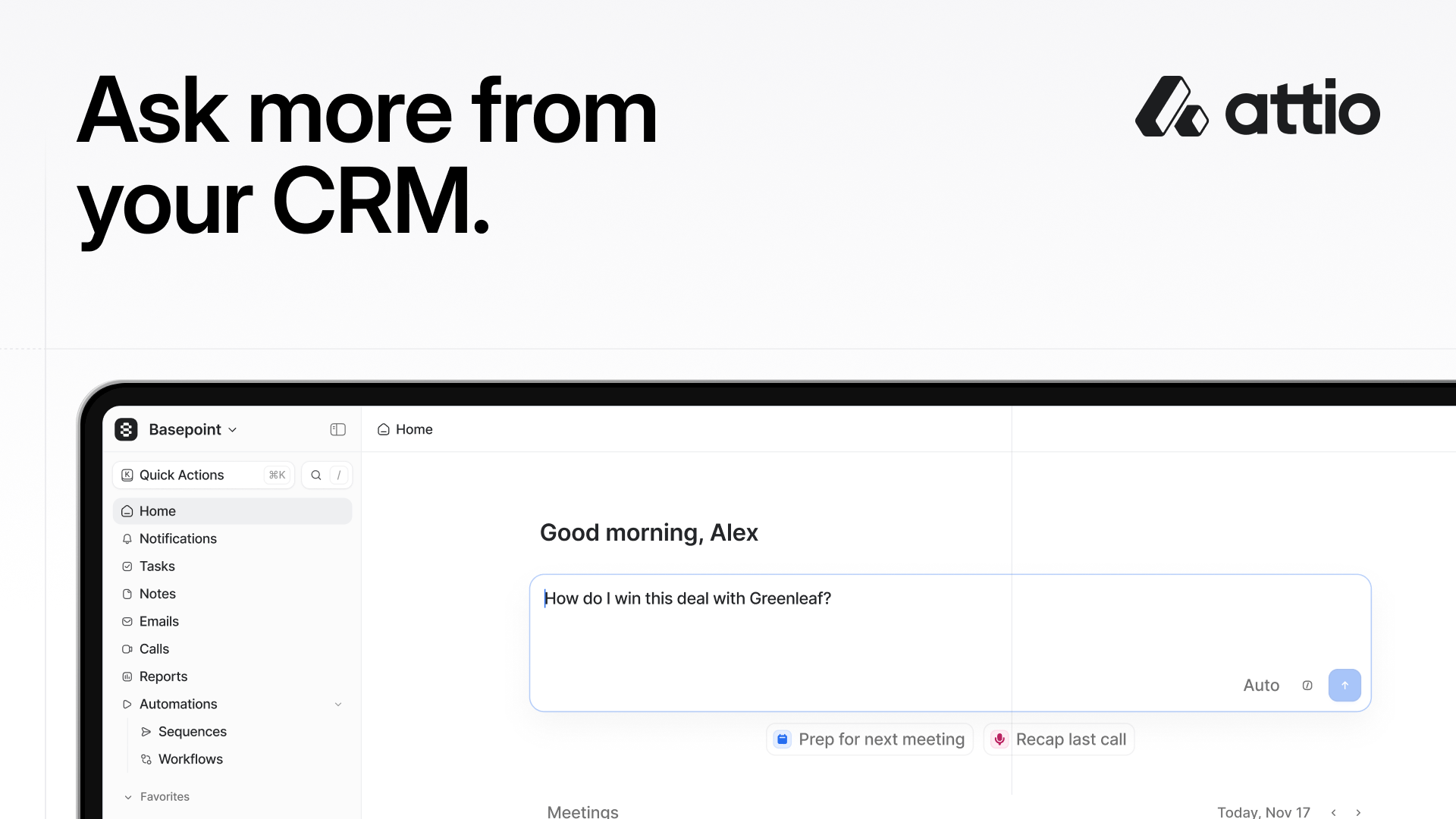
Connect your email, calls, product data and more, and Attio instantly builds your CRM with enriched data and complete context. Whether you’re running product-led growth or enterprise sales, Attio adapts to your unique GTM motion.
Then Ask Attio to plan your next move.
Run deep web research on prospects. Update your pipeline as you work. Find customers and draft outreach emails. Powered by Universal Context, Attio's intelligence layer, Attio searches, updates, and creates across your data to accelerate your workflow.
Ask more from your CRM.

An in-depth look at a major AI development, its industry impact, how it could affect your career, and a bold future prediction.

Musk's $38M early-stage capital and February 2018 board departure triggered after co-founders blocked his demand for unilateral AGI control. Microsoft's 26.79% diluted equity now marks $228.3B (17.6x on $13B deployed since 2019) while April's restructured deal caps cumulative revenue share at $38B through 2030, converting an open tax into fixed cost and saving OpenAI $97B against uncapped terms. Microsoft locked IP rights through 2032 independent of AGI declaration and eliminated its own revenue share to OpenAI on Azure model distribution, removing margin drag while preserving $250B compute commitment. 45% of Microsoft's commercial RPO tied to OpenAI by Q4 2025; company recorded $5.9B net gains in nine months ending March 2026 versus $2.7B losses prior year from equity-method accounting. The 2025 removal of the 100x investor profit cap (originally structured to redirect AGI surplus value to humanity) eliminates the credibility mechanism that justified OpenAI's founding charter, subordinating safety commitments to fiduciary obligations.
Potential Impact
Multi-vendor distribution rights end Azure bundling monopoly; UK procurement and FTSE-100 cloud tenders can now negotiate equivalent model access across AWS and GCP without Azure lock-in premium. Amazon's $50B equity injection plus $138B AWS commitment over eight years fragments infrastructure dependency while OpenAI's Frontier enterprise platform gains non-exclusive third-party distribution starting Q2 2026. Post-IPO lockup expiration enables Microsoft to monetize $228B marked equity through staged sell-down, converting paper gains into cash for $190B annual AI CapEx run rate without debt issuance or dilution. Verdict risk: Musk's $150B damage claim targeting both OpenAI and Microsoft could force pre-IPO corporate restructuring that invalidates prospectus economics and pushes offering timeline past 2026. Enterprise stack fragmentation accelerates. Any API layer built on single-vendor inference is structurally obsolete within 18 months as multi-model arbitrage becomes table stakes for margin preservation.
Implications for People/Careers
Microsoft AI infrastructure build consumes $40B+ per quarter through 2026 while maintaining capacity constraints, creating premium for chip architects, thermal engineers, and datacenter specialists who can compress deployment cycles. OpenAI's path from $852B private valuation to $1T public offering by year-end 2026 compresses equity value realization timelines. Employees holding pre-2024 grants face liquidity events 24-36 months earlier than standard seven-year cycles. Legal and governance professionals gain asymmetric leverage: nonprofit-to-PBC conversions with profit cap removal establish precedent for AGI value capture structures, making these specialists critical for every frontier lab fundraise. Multi-model inference architecture becomes non-negotiable skill for platform engineers. OpenAI's AWS/GCP distribution plus Microsoft's Anthropic/$5B stake in competing models means vendor-neutral orchestration separates senior from mid-level roles. Risk concentration: professionals betting pure-play OpenAI trajectories face exposure if verdict forces restructuring; those architecting cross-vendor abstraction layers capture the scarcity premium.
Our Future//Take
The 100x cap removal in 2025 represents the structural moment when AGI economics subordinated to investor fiduciary obligations. What OpenAI framed as ensuring "most value benefits everyone" became unlimited private capture. Microsoft's $228B equity mark and IP rights lock through 2032 create the first AGI-era liquidity instrument large enough to self-fund infrastructure buildout. Expect systematic equity rotation into compute as lockups expire. Amazon's $188B combined commitment and loss of Azure exclusivity signal the end of vertically-integrated AI stacks; horizontal orchestration layers that route across AWS/Azure/GCP become the new moat. Build vendor-agnostic inference infrastructure immediately. Any enterprise running hard dependencies on OpenAI APIs without fallback routing is operationally insolvent within 24 months. Microsoft's 45% commercial obligation concentration and capacity constraints through 2026 prove even the best-capitalized player can't scale fast enough; distributed compute arbitrage becomes the defensible position. The companies that master multi-model orchestration, cost-per-token optimization across providers, and inference caching at the edge will control enterprise AI margins. Everyone else pays the convenience tax until they're competed out. Here’s your ₹25,000 AI Gift for FREE 🎁

Quick summaries of this week's top AI news, their relevance to your career, and our expert opinions.
Anthropic secured 34.4% verified business customer penetration versus OpenAI's 32.3% across Ramp's 50,000+ enterprise client expense data, marking first time the challenger leads in procurement-validated adoption. The 26-percentage-point climb from 9% (May 2025) to 34.4% (May 2026) occurred while OpenAI contracted 1% and aggregate AI product adoption rose only 9%, proving Anthropic captured share rather than riding category expansion. Technical buyer segments (finance, technology, professional services) adopted first before Anthropic expanded horizontal through Cowork, validating land-and-expand through developer preference. OpenRouter's independent usage leaderboard showed OpenAI's last lead in December 2025, providing six-month forward indicator before Ramp's procurement data confirmed the shift. Anthropic simultaneously restructured enterprise contracts to $20/seat plus committed consumption, eliminating legacy API volume discounts to optimize ARR predictability. Finance teams accepted worse unit economics in exchange for reliability guarantees OpenAI couldn't match during governance turbulence.
Why It Matters to You
Technical buyers allocated budget to Anthropic at 34.4% penetration rates, meaning your procurement counterparts already validated Claude's production reliability over OpenAI's brand equity. The December 2025 OpenRouter crossover gave you six months of signal that developer preference was inverting. If you're still architecting single-vendor OpenAI dependencies, you ignored leading indicators visible to anyone tracking usage data. Anthropic's elimination of API discounts concurrent with share capture proves enterprise buyers value predictability and compliance over cost optimization. The Constitutional AI + PBC governance structure closed deals OpenAI lost during board drama and Microsoft litigation exposure. Regulated industries buying Anthropic's no-training-by-default guarantee and PBC legal structure simplified compliance conversations OpenAI's profit cap removal complicated. You're competing against buyers who already built vendor diversification while you debated whether to hedge OpenAI concentration risk.
Our Take
The 26-point penetration surge while OpenAI declined signals technical buyer defection, not just category expansion. Anthropic converted developer preference into procurement wins through execution reliability while OpenAI navigated governance chaos. Removing API discounts during peak growth demonstrates pricing power: Anthropic optimized for ARR predictability knowing enterprise buyers would accept worse unit economics for contractual stability. Cowork's launch enabled horizontal expansion beyond technical users after capturing finance/tech/professional services early adopters, proving the bottom-up playbook scales when infrastructure reliability precedes workflow automation. OpenAI's consumer ChatGPT dominance no longer translates to enterprise procurement. Brand recognition lost to implementation trust. Start evaluating Claude Opus 4.7 and Sonnet 4.6 for production inference this quarter; the market already moved while you were tracking consumer metrics. Enterprises paying $150-250/month per developer for Claude Code signals willingness to absorb premium pricing for guaranteed uptime. Build multi-model orchestration infrastructure now. The six-month lag between OpenRouter's December signal and Ramp's May confirmation means the next preference shift will appear in developer usage data before it surfaces in your procurement reports
Google announced Gemini Intelligence OS-level integration across 3.9 billion Android devices (72.77% global mobile OS share) weeks before Apple's WWDC announcement, where Apple will showcase Siri rebuilt entirely on a custom 1.2 trillion parameter Gemini model licensed from Google for $1 billion annually, extending to 2.5 billion Apple devices. Alphabet hit $4 trillion market cap on deal announcement day, driven by 750 million Gemini monthly active users, 10 billion tokens per minute via API, 8 million paid enterprise licenses, and $240 billion backlog reflecting 55% growth. Gemini Intelligence moves across apps with screen context awareness to complete multi-step agentic workflows including shopping cart assembly, reservation booking, and form automation with human-in-loop transaction approval. Google deploying $175-$185 billion AI capex in 2026 versus $91.4 billion in 2025 while 70% of Google Cloud customers already adopted AI products and TPU infrastructure revenue scales from $3 billion (2026) to projected $25 billion (2027). Google captures revenue share on product discovery and purchases executed through Gemini-powered Siri on iOS, monetizing both platforms.
Why It Matters to You
Google engineered dual-sided platform economics: owned OS-level integration across 3.9 billion Android devices plus licensed custom 1.2 trillion parameter models to Apple's 2.5 billion devices for $1 billion annually with commerce revenue share. The pre-announcement timing proves strategic intent. Google demonstrates superior OS-level implementation of Gemini Intelligence weeks before Apple ships the licensed version, establishing the Android integration as reference architecture and making Apple's WWDC announcement derivative. Apple rebuilt Siri's entire conversational stack on Gemini foundation (custom 1.2T parameters vs Apple's internal 150B models), signaling admission their internal capabilities can't compete at frontier. The $4 trillion valuation crossed on deal announcement, 750M MAU, and $240B backlog validate Wall Street's recognition that Google captured distribution across both major mobile platforms while competitors remain single-sided. $175-$185B 2026 capex commitment creates compute capacity moat competitors can't match without equivalent capital deployment.
Our Take
Google executing reference implementation weeks before Apple's licensed version ships establishes Android as the canonical Gemini platform, making iOS integration appear as white-label distribution of Google's technology. Dual monetization (Android ownership + $1B annual iOS licensing + commerce revenue share from Apple transactions) creates asymmetric platform advantage no competitor replicates. The $240B backlog, 70% Cloud customer AI adoption, and 8M paid enterprise licenses prove enterprise already committed capital before consumer OS-level integration launches. TPU revenue scaling from $3B to $25B (2026-2027) breaks Nvidia dependency while creating margin structure licensing competitors can't match. Apple's 2.5B device reach amplifies Gemini distribution while simultaneously validating Google's models as superior to Apple's internal development. Architect for OS-level agentic workflows with explicit transaction consent gates immediately. The human-in-loop approval pattern before checkout becomes regulatory compliance standard within 18 months. Products built on app-layer AI without OS integration face structural disadvantage against platform-native implementations. Google's traffic, data, and monetization integration allows Gemini embedding without user acquisition costs, creating unit economics AI-only competitors cannot replicate. The companies mastering cross-app context understanding, multi-step automation, and platform-level distribution control enterprise AI economics. Standalone model providers compete for residual demand Google and Apple don't serve across 6.4 billion combined devices
Vapi closed $50 million Series B at $500 million post-money valuation led by Peak XV with Microsoft M12, Kleiner Perkins, and Bessemer participating after Amazon Ring evaluated over 40 voice AI vendors and selected Vapi to handle 100% of inbound customer support routing. The startup processes 1 to 5 million calls daily, handled 1 billion+ total calls, and reached healthy eight-figure ARR while Gartner forecasts voice AI will cut $80 billion from contact center labor costs in 2026 at $0.20-$0.50 per call versus $7-$12 human agent costs. Vapi's self-serve developer platform attracted 1 million+ users providing battle-testing at scale before enterprise deployment, differentiating through infrastructure orchestration layer rather than pre-packaged vertical applications. Ring VP Jason Mitura confirmed customer satisfaction improved post-deployment with teams tuning AI agent behavior without engineering dependency, crediting Vapi's granular control over reliability, compliance, and model behavior. Production voice agent deployments grew 340% year-over-year as 67% of Fortune 500 and 78% of top 50 banks deployed production systems, with voice AI funding surging 8x to $2.1 billion in 2025.
Why It Matters to You
Ring's 100% inbound routing through Vapi after evaluating 40+ vendors signals infrastructure control trumps packaged solutions when enterprises deploy voice AI at production scale. The $0.20-$0.50 per call economics versus $7-$12 human costs create 93%+ unit economics improvement driving Gartner's $80 billion labor savings forecast and 331-391% three-year ROI with sub-six-month payback. The 1 million developer footprint created edge-case handling and latency optimization that vertical vendors building packaged apps cannot replicate, proving infrastructure-first GTM captures enterprise spend when reliability matters more than feature velocity. Production deployments grew 340% YoY with 67% of Fortune 500 and 78% of top 50 banks running live systems, meaning voice AI infrastructure already crossed enterprise adoption threshold while you debated pilot programs. Voice AI market reaches $22.5 billion in 2026 projecting to $47.5 billion by 2034 at 34.8% CAGR. Build for orchestration layer if targeting enterprise or compete for SMB scraps vertical vendors already monetize.
Our Take
Ring's selection after 40-vendor evaluation during Q4 holiday traffic validates that enterprises prioritize sub-500ms latency infrastructure with model tunability over pre-built vertical solutions when deploying at 100% routing thresholds. The $80 billion Gartner labor savings forecast and 93%+ cost reduction from $7-$12 human to $0.20-$0.50 AI per-call economics prove voice automation crossed CFO approval threshold for full call center replacement, not pilot supplementation. Vapi's 1 million developer adoption before enterprise sales created the usage telemetry and edge-case library that justifies $500 million valuation despite healthy eight-figure ARR, demonstrating platform value accrues to orchestration layers while TTS/STT commoditizes. Voice AI funding surged 8x to $2.1 billion in 2025 with ElevenLabs reaching $11 billion valuation on $330 million ARR, but TTS/generation models face margin compression as orchestration platforms capture enterprise budgets. Production deployments grew 340% with 78% of top 50 banks deploying voice agents (up from 34% in 2024). The infrastructure winners master low-latency orchestration, multi-model routing, and compliance architecture that enterprises require at Ring's 100% routing scale. Vertical SaaS players compete for use cases infrastructure platforms choose not to serve directly. Position at orchestration layer with developer adoption that creates production telemetry before selling enterprise contracts. The companies owning sub-500ms voice infrastructure with proven edge-case handling at millions of daily calls control margin structure as call centers automate. Pre-packaged vertical solutions compete on implementation speed while infrastructure vendors monetize the reliability premium enterprises pay for production deployment at scale.

Discover a comprehensive guide to an AI tool, exploring its features, practical use cases, and learning resources to help you master it.

🗣️ Bardeen.ai
Bardeen.ai is a no-code automation platform that operates directly in your browser, enabling professionals to automate repetitive workflows across web applications without writing a single line of code. By combining browser-based automation with AI-powered intelligence, Bardeen eliminates manual tasks like data entry, lead research, and cross-app workflows, helping teams reclaim hours of productive time each week.
⭐ Top Features
Magic Box AI Builder: Describe your desired automation in plain language, and Bardeen's AI generates the complete workflow automatically, making automation accessible to non-technical users.
Intelligent Web Scraping: Extract data from any website with precision using custom or pre-built scrapers that can navigate multiple pages, interact with elements, and handle complex extraction tasks.
100+ App Integrations: Seamlessly connects with popular tools like Google Sheets, Slack, HubSpot, Notion, LinkedIn, Salesforce, and Gmail to create unified workflows across your entire tech stack.
Playbooks and Autobooks: Build automated sequences that run on-demand (Playbooks) or trigger automatically based on schedules, webpage visits, or changes in connected apps (Autobooks).
AI Agents and Enrichment: Leverage specialized AI copilots for different domains, including lead scoring, data enrichment with verified contact details, and intelligent research that understands your ideal customer profile.
Resources for Learning

A curated list of noteworthy AI tools and their key details to help you stay ahead in your field.

Taskade is an AI-powered workspace that combines task management, note-taking, mind mapping, and workflow automation with customizable AI agents that can execute multi-step processes across your projects.

Spoke.ai transforms Slack into a focused communication hub by automatically summarizing long thread discussions, creating personalized action items, and providing scheduled channel digests to help teams cut through noise and prioritize what matters.

Magical is a Chrome extension that automates repetitive typing and data entry tasks using text expansion shortcuts and AI-powered autofill, enabling users to personalize messages and populate forms across any website without coding.

Browse.ai is a no-code web scraping and monitoring platform that turns any website into a structured dataset by training AI robots to extract data, track changes, and send automated alerts when content updates.

A quick poll to help you recollect and engage with key points from the newsletter.
What major trend is defining AI development in 2026, according to industry experts? |

Share your feedback on today's edition to help us improve and better meet your needs.
How was Today’s Edition? |
Share our Newsletter ⏩
Enjoying our insights on the latest AI breakthroughs? Don’t keep it to yourself! Share this newsletter with friends and colleagues who are passionate about technology and AI innovation.
If you haven’t subscribed yet, make sure to subscribe here to stay updated with cutting-edge AI news, tools, and tutorials delivered straight to your inbox!
Ask Us Anything AI ❓
Got questions? We've got answers!
Submit your questions, queries, thoughts, opinions or anything regarding AI and we'll feature and address them in our next newsletter. Your curiosity drives our content!
👇 Reply to this email with your questions, and we'll answer them in our next edition!👇