- Future//Proof
- Posts
- 💰India may be sitting on AI’s next trillion-dollar dataset
💰India may be sitting on AI’s next trillion-dollar dataset
India’s human data advantage, Uber’s ROI dilemma, and why AI talent is becoming national infrastructure. 🤖

Avinash Mada
May 28, 2026
In partnership with

Welcome to the Future//Proof 🚀
👋 Hello , the AI Enthusiast.
In this week’s edition, we brought AI updates backed by high-quality research and data to give you deeper insights. You'll find the Top AI Breakthrough of the Week, a featured AI tool with a mini-tutorial, learning resources to help you master these tools, the top 3 AI news stories, and more.
Our goal is to help you improve your knowledge and stay ahead in the rapidly evolving AI landscape. You can submit your questions, queries, thoughts, opinions or anything regarding AI as a reply to this email and we'll feature and address them in our next newsletter.
🚀 Now Let’s dive in and explore the new AI Insights together!
⌛ Read Time: 6m:15s
Attio is the AI CRM for high-growth teams.
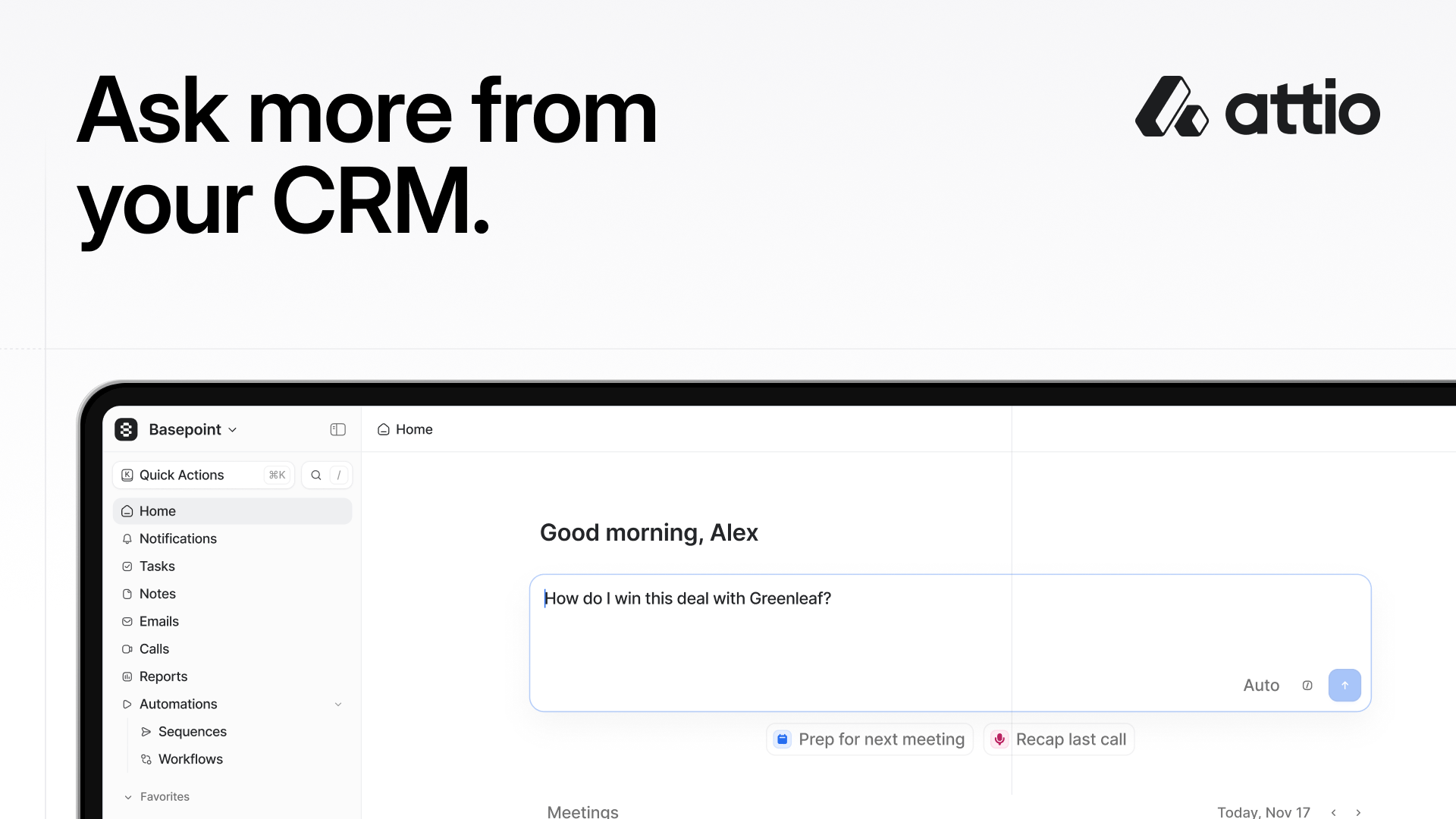
Connect your email, calls, product data and more, and Attio instantly builds your CRM with enriched data and complete context. Whether you’re running product-led growth or enterprise sales, Attio adapts to your unique GTM motion.
Then Ask Attio to plan your next move.
Run deep web research on prospects. Update your pipeline as you work. Find customers and draft outreach emails. Powered by Universal Context, Attio's intelligence layer, Attio searches, updates, and creates across your data to accelerate your workflow.
Ask more from your CRM.

An in-depth look at a major AI development, its industry impact, how it could affect your career, and a bold future prediction.

The next AI moat may come from human motion data and Human Archive is mining India for it
LLMs scaled on internet exhaust. Physical AI has no equivalent corpus.
Human Archive aims to build one.
The company taps India’s services startup ecosystem to collect high volume, real world human action data for embodied AI systems. Not clicks. Not prompts. Physical execution. Task completion. Motion, sequencing, adaptation, error handling.
This matters because robotics still suffers from a brutal data asymmetry. Language models inherited trillions of public tokens. Physical systems inherit fragmented lab datasets, synthetic simulations, and narrow industrial logs.
India changes the economics. Dense labor markets, heterogeneous workflows, and low cost operational capture create a rare environment for generating diverse physical intelligence datasets.
The strategic play is larger than robotics training. Whoever owns scalable human behavior data for the physical world may control the foundational layer beneath autonomous logistics, industrial automation, domestic robotics, and machine agency.
Potential Impact
Three immediate unlocks:
Robotics generalization: Models trained beyond sterile lab environments into noisy real world execution.
Industrial automation acceleration: Warehousing, fulfillment, manufacturing, field operations.
Embodied foundation models: Cross domain systems that learn transferable physical competencies.
The hidden impact sits at the infrastructure layer. Physical AI lacks its Common Crawl moment. Human Archive is betting that distributed labor networks can become the equivalent data substrate.
If correct, this compresses robotics deployment timelines measured today in years.
Implications for People/Careers
The labor market bifurcation deepens.
Workers who merely execute tasks become automation targets. Workers who generate machine learnable operational intelligence gain pricing power.
Entry level roles increasingly function as data exhaust generators. Mid career operators with tacit workflow knowledge become valuable because edge cases train systems. Senior talent shifts toward orchestration: designing human AI production loops, validation systems, and operational feedback architectures.
The durable skill no longer sits in doing repetitive work efficiently.
It sits in translating messy human competence into machine legibility.
Our Future//Take
The next AI platform war will not center on better chat interfaces. It will center on ownership of physical reality datasets.
Education still trains symbolic reasoning. Capital increasingly rewards embodied intelligence. That gap creates opportunity.
India could emerge not only as a software talent exporter, but as the world’s largest producer of physical training data infrastructure.
Act accordingly.
Study robotics economics. Learn human in the loop systems. Understand operational telemetry, simulation pipelines, and embodied model evaluation.
The highest leverage companies of the next decade may look less like software firms and more like vertically integrated data refineries for the physical world. Here’s your ₹25,000 AI Gift for FREE 🎁

Quick summaries of this week's top AI news, their relevance to your career, and our expert opinions.
Uber is running into a problem many companies will face next: AI adoption is growing faster than proof of value. Uber’s engineering teams reached roughly 95% monthly adoption of AI coding tools, and AI agents now write more than 10% of the company’s code. But internally, leadership admits they still struggle to connect rising AI usage to a measurable increase in customer value or product output.
The pressure is financial too. Uber reportedly exhausted its 2026 Claude Code budget within four months, while its 2025 R&D spend hit $3.4 billion, up 9% year over year. To absorb those costs, Uber has slowed hiring.
This matters because Uber is not AI hesitant. It is a deeply technical company with scale, talent, and deployment muscle. If even Uber cannot cleanly prove ROI from aggressive AI usage, the market is moving from AI experimentation into AI accountability.
Why It Matters to You
You should stop treating AI usage as a success metric.
The next competitive advantage will not come from “using AI everywhere.” It will come from showing exactly where AI improves speed, margins, product quality, or customer outcomes. Uber’s struggle exposes a hard truth: token consumption, copilots, and adoption dashboards do not automatically create leverage.
If you run a company, build content, manage teams, or ship products, start measuring AI like capital allocation. Which workflows improved? Which costs dropped? Which outputs became materially better? Anything else becomes expensive theater.
Our Take
This is the beginning of the enterprise AI correction.
The first wave rewarded companies for announcing AI adoption. The next wave will reward companies that can prove output per dollar. Expect more CFO scrutiny, tighter AI budgets, and sharper demands for measurable ROI.
You should act now: audit every AI workflow you use. Keep the systems that compress time, expand capability, or unlock new revenue. Cut the ones that create activity without outcomes.
The winners will not be the companies using the most AI. They will be the ones turning AI costs into undeniable business advantage.
Pope Leo XIV has issued the strongest religious intervention into AI so far, arguing that artificial intelligence is not just a software story but a human systems story involving labor, truth, power, and accountability. In his major encyclical Magnifica Humanitas, he warns that AI can deepen inequality, weaken democracy, distort information, and concentrate power inside a small technocratic elite.
The document pushes beyond familiar AI safety talking points. Leo criticizes exploitative hidden labor behind AI systems, questions GDP-style growth metrics, warns about AI-amplified misinformation, rejects autonomous lethal decision making in warfare, and calls for stronger public oversight of data, governance, and ethical standards.
The timing matters. AI has moved from novelty to infrastructure. When a global institution with over a billion followers frames AI as an economic, political, and moral issue rather than a purely technical one, regulation, public opinion, and corporate scrutiny tend to follow.
Why It Matters to You
You should pay attention because the AI conversation is shifting from what models can do to who benefits, who loses, and who stays accountable.
If you build products, lead teams, create content, or run a business, expect growing pressure around transparency, labor impact, governance, and responsible deployment. “We used AI” will not be enough. You will increasingly need answers for data ownership, decision responsibility, workforce effects, and trust.
This is not just a policy debate. It is the operating environment your business will compete inside.
Our Take
Pope Leo is identifying a blind spot many tech conversations avoid: AI is becoming a power structure, not just a productivity tool.
Expect the next phase of AI adoption to bring tougher questions around labor displacement, platform control, misinformation, and concentrated compute power. The winners will not be companies with the loudest AI narrative. They will be the ones that can prove human benefit alongside technical capability.
You should start building that muscle now. Audit your AI stack not only for efficiency gains, but for governance, trust, explainability, and long term defensibility. That is where durable advantage is heading.
China is tightening control over one of the most valuable resources in AI: elite talent.
The country is increasingly keeping top researchers, founders, and technical operators inside its domestic ecosystem instead of watching them flow toward US labs, foreign investors, or overseas startups. That shift shows up through tighter oversight of cross border movement, stronger pressure against foreign capital dependence, and aggressive efforts to retain researchers inside companies like Alibaba, DeepSeek, and ByteDance.
The backdrop is bigger than hiring competition. AI talent has become national infrastructure. Beijing already treats AI as a strategic capability tied to economic strength, security, and technological self reliance. That means talent mobility, startup funding, acquisitions, and even international travel increasingly fall under geopolitical logic, not just market logic.
The implication is clear: the global AI race is no longer just about compute, chips, or models. It is becoming a battle over where the smartest builders are allowed, incentivized, and expected to build.
Why It Matters to You
You should stop viewing AI talent as a purely global free market.
If you build startups, hire technical teams, invest in AI, or plan long term strategy, geopolitical talent fragmentation now affects your future talent pool, partnerships, pricing, and competitive landscape.
The old assumption was simple: the best researchers would naturally migrate toward the highest paying global labs. That assumption is weakening. National interests increasingly shape where expertise stays, who gets access, and which ecosystems compound fastest.
Your AI strategy now needs a geopolitical layer, not just a product roadmap.
Our Take
This signals the arrival of AI nationalism at the talent level.
The next decade will not produce one unified global AI ecosystem. It will produce competing regional power centers with tighter control over researchers, capital, compute, and intellectual property.
You should adapt early. Build talent pipelines that do not depend on one geography. Watch policy as closely as product releases. Invest in internal capability instead of assuming elite AI talent remains globally liquid.
The companies that win will not just access great models. They will secure durable access to the people capable of building what comes after them.

Discover a comprehensive guide to an AI tool, exploring its features, practical use cases, and learning resources to help you master it.

🗣️ Genspark
Genspark is an all-in-one AI workspace built around a powerful “Super Agent” that can research, create, analyze, and execute tasks autonomously from a single prompt. Unlike traditional AI chat tools that mainly answer questions, Genspark combines deep research, content generation, browser automation, and productivity tools into one platform. This makes it ideal for creators, operators, marketers, founders, and teams who want an AI that doesn’t just provide information, but actually gets work done.
⭐ Top Features
Super Agent: Give Genspark a high-level goal (“Research competitors, summarize findings, and create a strategy deck”) and it plans, researches, creates deliverables, and completes multi-step workflows autonomously instead of just replying with text.
Sparkpages (AI Deep Research): Instead of showing a list of links like a search engine, Genspark generates structured, dynamic research pages that combine information from multiple sources into one clean, interactive view with summaries, comparisons, citations, and follow-up exploration built in.
AI Workspace Tools (Slides, Sheets, Docs & Developer): Create presentations, spreadsheets, reports, websites, apps, and even code projects from natural language prompts. Genspark can auto-research content for decks, generate formulas in sheets, draft professional documents, and support development workflows from one interface.
Browser Automation & Real-World Actions: Genspark can autonomously navigate the web, automate browser tasks, compare products, summarize videos, and even make phone calls on your behalf for things like reservations, customer support, or information gathering, pushing beyond “AI assistant” into true agent behavior.
Multi-Model / Agentic Architecture: Under the hood, Genspark orchestrates multiple AI models and specialized agents to handle complex reasoning, research, content creation, and execution tasks, helping it tackle workflows that would normally require several separate tools.
Resources for Learning

A curated list of noteworthy AI tools and their key details to help you stay ahead in your field.

Mapify is an AI-powered visual learning tool that converts YouTube videos, PDFs, articles, documents, and webpages into structured mind maps, helping users quickly understand, organize, and retain complex information through interactive visual summaries.

Dust is an enterprise AI assistant platform that allows teams to build custom AI agents connected to company tools like Slack, Notion, Google Drive, GitHub, and internal databases, enabling employees to search knowledge, automate workflows, and perform work using organizational context.

AirOps is an AI workflow platform designed for content, SEO, and growth teams that combines LLM workflows, data sources, and automation to help users research topics, generate content, optimize SEO operations, and scale marketing workflows with greater speed and consistency.

Goblin Tools is a lightweight AI productivity toolkit that helps users break down overwhelming tasks into manageable steps, estimate time requirements, adjust writing tone, and simplify everyday planning, making it especially useful for improving organization, focus, and task execution.

A quick poll to help you recollect and engage with key points from the newsletter.
What major capability made OpenAI’s latest AI agents stand out in recent releases? |

Share your feedback on today's edition to help us improve and better meet your needs.
How was Today’s Edition? |
Share our Newsletter ⏩
Enjoying our insights on the latest AI breakthroughs? Don’t keep it to yourself! Share this newsletter with friends and colleagues who are passionate about technology and AI innovation.
If you haven’t subscribed yet, make sure to subscribe here to stay updated with cutting-edge AI news, tools, and tutorials delivered straight to your inbox!
Ask Us Anything AI ❓
Got questions? We've got answers!
Submit your questions, queries, thoughts, opinions or anything regarding AI and we'll feature and address them in our next newsletter. Your curiosity drives our content!
👇 Reply to this email with your questions, and we'll answer them in our next edition!👇