- Future//Proof
- Posts
- 🦾 The US controls all AI models and the rest of the world is not okay with it!
🦾 The US controls all AI models and the rest of the world is not okay with it!
Space X IPO, India focusing more on it’s AI development and more in this week’s newsletter.🤖

Avinash Mada
June 18, 2026
In partnership with

Welcome to the Future//Proof 🚀
👋 Hello , the AI Enthusiast.
In this week’s edition, we brought AI updates backed by high-quality research and data to give you deeper insights. You'll find the Top AI Breakthrough of the Week, a featured AI tool with a mini-tutorial, learning resources to help you master these tools, the top 3 AI news stories, and more.
Our goal is to help you improve your knowledge and stay ahead in the rapidly evolving AI landscape. You can submit your questions, queries, thoughts, opinions or anything regarding AI as a reply to this email and we'll feature and address them in our next newsletter.
🚀 Now Let’s dive in and explore the new AI Insights together!
⌛ Read Time: 6m:22s
Attio is the AI CRM for high-growth teams.
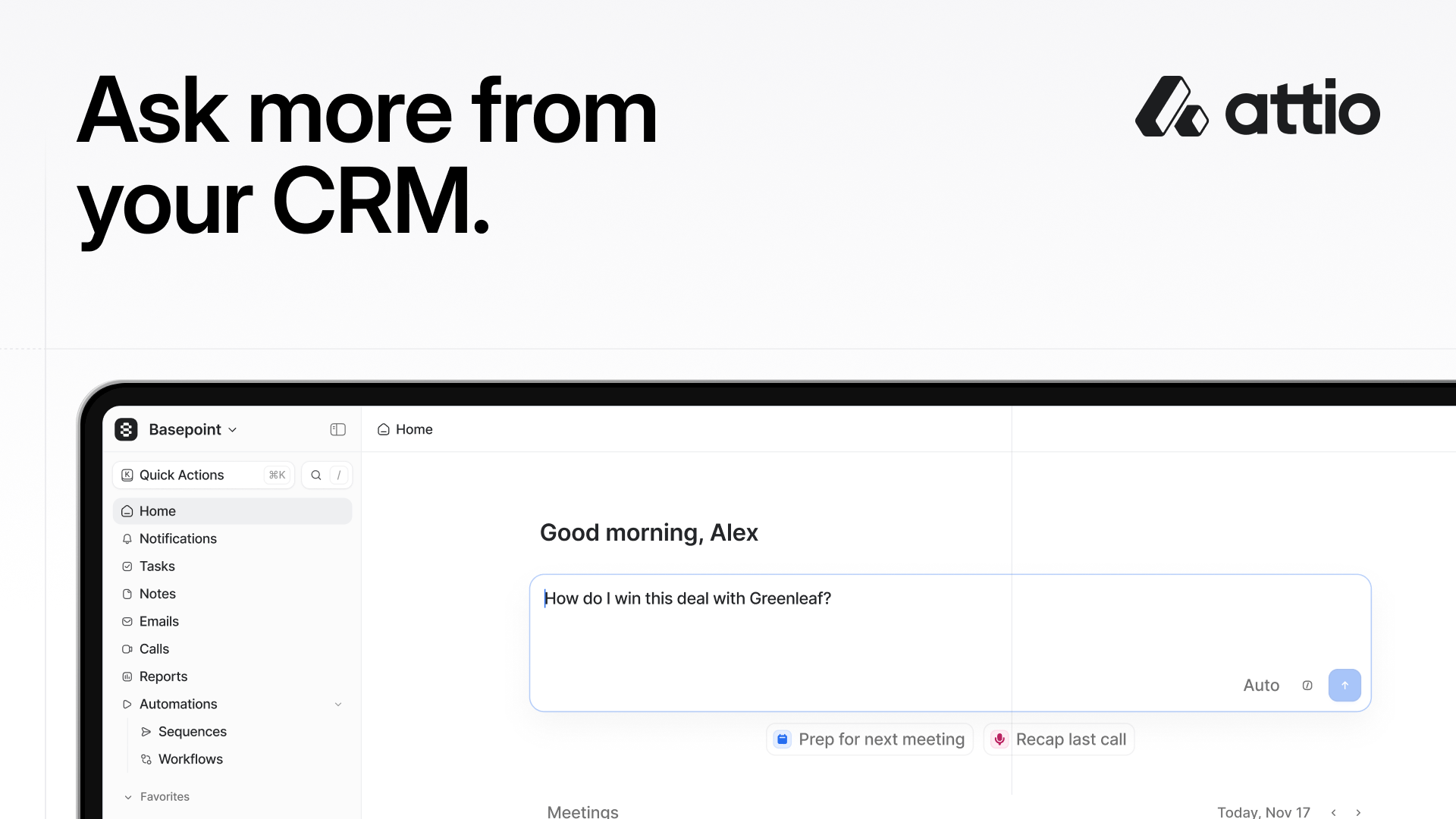
Connect your email, calls, product data and more, and Attio instantly builds your CRM with enriched data and complete context. Whether you’re running product-led growth or enterprise sales, Attio adapts to your unique GTM motion.
Then Ask Attio to plan your next move.
Run deep web research on prospects. Update your pipeline as you work. Find customers and draft outreach emails. Powered by Universal Context, Attio's intelligence layer, Attio searches, updates, and creates across your data to accelerate your workflow.
Ask more from your CRM.

An in-depth look at a major AI development, its industry impact, how it could affect your career, and a bold future prediction.

SpaceX Adds Nearly $1 Trillion in Value Within Days of Its IPO
SpaceX’s valuation surged to roughly $2.6–$2.7 trillion, briefly overtaking Amazon and placing the company among the five most valuable businesses on Earth. The rise comes just days after its historic IPO, which raised approximately $85.7 billion and pushed the company above a $2 trillion valuation on debut. Since listing, SpaceX has added nearly $1 trillion in market value in less than a week.
The significance goes beyond stock price. SpaceX immediately converted that valuation into strategic leverage, announcing a $60 billion stock acquisition of Cursor, one of the most important AI coding startups. A soaring market cap now functions as a financing engine, allowing SpaceX to buy critical assets with equity instead of cash. The company is no longer just a space business. Investors are pricing it as a future platform spanning launch, satellites, communications, AI infrastructure, and software.
Potential Impact
This marks the emergence of a new type of company: one that combines physical infrastructure, AI, communications, and capital markets power under a single umbrella.
High-leverage applications include:
Building AI infrastructure powered by satellite connectivity and future orbital computing systems.
Accelerating software development through integrated AI coding platforms.
Funding large-scale innovation through stock-based acquisitions rather than traditional financing.
The real shift is speed. SpaceX can now deploy capital, talent, and technology at a scale that few governments or corporations can match.
Implications for People/Careers
The winners will be engineers, AI researchers, systems builders, infrastructure operators, and operators who can work across multiple domains. The losers will be specialists whose skills sit inside narrow silos.
Entry-level workers face increasing pressure as AI coding tools absorb routine development tasks. Mid-level professionals must learn to manage AI-driven workflows instead of executing repetitive work. Senior leaders gain leverage if they can combine software, AI, hardware, and capital allocation into one strategy.
The market is rewarding people who build platforms, not people who maintain processes.
Our Future//Take
The biggest story is not SpaceX passing Amazon. The biggest story is that markets now reward companies that control entire ecosystems rather than individual products.
Space, AI, energy, communications, and software are converging into a single competitive arena. SpaceX sits at the center of that convergence. Expect more trillion-dollar companies to emerge from infrastructure ownership rather than consumer apps.
For ambitious professionals, the move is obvious: build expertise where physical systems meet AI. For startups, own a critical layer of the stack. For nations, the race is no longer about launching rockets. It is about controlling the infrastructure that powers intelligence itself. Here’s your ₹25,000 AI Gift for FREE 🎁

Quick summaries of this week's top AI news, their relevance to your career, and our expert opinions.
A new fault line emerged at the G7 summit. Countries including France and India openly questioned whether the world can safely rely on American AI when access can be revoked overnight. The concern follows the U.S. government’s decision to restrict access to Anthropic’s advanced models, including Mythos 5 and Fable 5, forcing the company to suspend access for foreign users.
French President Emmanuel Macron and Indian Prime Minister Narendra Modi argued that AI is becoming critical national infrastructure, not just software. If a foreign government can suddenly disable access, every company, institution, and government built on that technology becomes vulnerable.
The debate has quickly expanded beyond Anthropic. It now touches OpenAI, Google DeepMind, cloud providers, chips, and the entire American AI stack. Leaders still want the performance advantages of U.S. models, but they increasingly want local infrastructure, domestic alternatives, and guarantees that access cannot disappear because of geopolitical decisions.
This marks the beginning of the AI sovereignty era.
Why It Matters to You
If your company, content business, product, or workflow depends on a single AI provider, you now have a geopolitical risk, not just a software risk.
The biggest lesson is simple: do not build your future on tools you cannot control. Governments are realizing this at a national level, and founders should realize it at a company level.
The winners of the next decade will not just use the best AI. They will build systems that can switch models, switch providers, and continue operating regardless of policy changes, export controls, or platform decisions.
Our Take
This is the moment AI stops being treated like SaaS and starts being treated like energy, semiconductors, and telecommunications.
Over the next three years, expect every major economy to invest aggressively in AI sovereignty through local data centers, domestic models, regional cloud infrastructure, and strategic partnerships. The market will split between AI capability and AI control.
You should act now. Diversify across multiple model providers, reduce dependence on any single AI stack, and design your workflows for portability. The companies that survive the next phase of AI will not be the ones with the smartest prompts. They will be the ones with the fewest points of failure.
India's policy leaders are sending a clear message: renting intelligence is not the same as owning it. Following recent US restrictions on access to advanced AI systems and technologies, NITI Aayog is advocating for a stronger push toward sovereign AI infrastructure, domestic compute capacity, local models, and indigenous AI capabilities. The concern is straightforward. If critical AI infrastructure, chips, cloud resources, or frontier models remain controlled by foreign entities, India's long-term technological future remains vulnerable to geopolitical decisions made elsewhere.
This thinking extends beyond chatbots. It includes GPUs, data centers, foundation models, AI talent, research ecosystems, and public sector adoption. The government is already reviewing strategies to expand locally controlled AI infrastructure while creating incentives for domestic development. The shift mirrors a broader global trend: countries no longer see AI as software. They see it as strategic infrastructure, similar to energy, telecommunications, and semiconductors.
Why It Matters to You
If you build products, content, services, or businesses on AI, this is a preview of the future market. The winners won't simply be companies with the best prompts. They'll be companies that own critical parts of their stack, control their data, and can operate even when platforms, providers, or governments change the rules.
This also creates a massive opportunity. As India invests in local AI infrastructure, new startups will emerge across compute, model development, AI tooling, enterprise applications, and vertical AI solutions. The next decade of value creation may come from building on top of India's AI ecosystem rather than importing everything from abroad.
Our Take
This is not a reaction to one policy decision. It's the beginning of India's AI industrial strategy. Every major economy is discovering the same lesson: dependence feels efficient until access becomes uncertain.
Over the next five years, expect India to invest aggressively in domestic compute infrastructure, AI research, semiconductor capabilities, and locally governed foundation models. The conversation will shift from "Which AI model should we use?" to "Who controls the infrastructure underneath it? If you're a founder, start paying attention to sovereignty, not just capability. The biggest opportunities will emerge where India replaces dependency with ownership. That is where capital, talent, and policy support are likely to converge next.
For nearly two decades, social media platforms decided what you saw, why you saw it, and what went viral. That model is beginning to change. Instagram has expanded its new "Your Algorithm" feature across Feed, Explore, and Reels, giving users direct visibility into the topics shaping their recommendations. Users can now tell the platform what they want more of, what they want less of, and actively influence how the recommendation engine behaves.
This may look like a product update, but it represents a much larger shift. Social platforms are facing growing pressure from users, regulators, and creators who no longer trust opaque recommendation systems. At the same time, emerging networks such as Bluesky and other open-social projects are experimenting with customizable feeds and algorithm choice. The industry is moving from algorithmic control to algorithmic transparency. Instead of one feed deciding what billions of people consume, users are beginning to influence the rules themselves.
Why It Matters to You
For creators, marketers, and founders, this changes the game. The old strategy was learning how to please the algorithm. The new strategy is understanding how users want their algorithms configured.
Distribution is becoming more intentional. If users gain greater control over recommendations, attention becomes harder to manipulate through growth hacks and easier to earn through genuine relevance. The creators who win next won't be the ones who understand platform tricks. They'll be the ones who consistently create content people actively choose to see more of.
Our Take
This is the first step toward a future where algorithms become products rather than hidden infrastructure. Over the next few years, expect platforms to compete on feed quality, transparency, and customization. Users will increasingly choose recommendation systems the same way they choose apps today.
If you're building an audience, stop optimizing purely for reach. Start optimizing for preference. Create content so valuable that users willingly train their algorithms to surface more of it. The biggest winners won't be the people who crack the algorithm. They'll be the people users intentionally program their algorithms to follow.

Discover a comprehensive guide to an AI tool, exploring its features, practical use cases, and learning resources to help you master it.

🗣️ Manus
Manus is an autonomous AI agent. The name is Latin for "hand," and that's the pitch: an AI that does the work instead of just answering questions. It plans multiple steps, browses the web, writes and runs code, analyzes data, and delivers finished results, all inside a sandboxed cloud computer with a real browser, terminal, and file system. Till Freitag Built by Butterfly Effect (founded in China, now based in Singapore), it's popular with researchers, analysts, and solopreneurs who'd rather delegate a multi-hour task than babysit a chat window. It's free to start, with paid plans from $20/month.
⭐ Top Features
Goal-to-Deliverable Autonomy: Describe an outcome, not steps, and Manus breaks it into subtasks and executes them in the background. A multi-agent setup (Planner / Executor / Verifier) chains browser actions, code, spreadsheets, slide decks, and research over multi-hour sessions from a single prompt.
Five-Mode Workflow: Chat for quick low-credit queries, Agent for full autonomous builds, Wide Research for large-scale jobs, Design View for image editing, and Slide Creation for decks that export to PowerPoint. Picking the right mode is also how you control credit spend.
Real Sandbox, Real Tools: Each session spins up a VM with a real browser, terminal, and file system, and Manus takes screenshots as it works to verify its actions actually completed. It uses live web data, so it can read charts, fill forms, and extract tables.
Desktop App with "My Computer": A macOS and Windows app lets the agent work on your actual machine. It can read and write files you grant access to, run terminal commands behind a permission gate, use installed dev tools, and accept tasks remotely from your phone.
More Than Research: Beyond research it builds full websites and apps with a database and Stripe, plus AI slides, image and music generation, and Slack integration, and it can run several agents at once. That backend and multi-agent automation is something pure builders like Lovable and Bolt lack, though outputs usually need refinement before production.
Resources for Learning

A curated list of noteworthy AI tools and their key details to help you stay ahead in your field.

Cleanvoice is an AI audio and video editor that automatically strips out filler words, background noise, mouth sounds, and dead air so you can polish a recording in minutes instead of hours. It removes filler words in over 20 languages and accents, syncs and cleans multiple guest tracks at once, and generates transcripts, show notes, and summaries. Unlike transcript-based editors, it works directly on the audio, and it offers a timeline export so you can do final tweaks in your own DAW.

Castmagic turns a single audio or video recording into a full pack of ready-to-publish content. Upload an episode and its AI generates transcripts, show notes, blog posts, social posts, email newsletters, key quotes, and timestamps, with one recording producing dozens of assets. It supports over 60 languages with speaker detection, and custom repeatable prompts let you set your formats once so every episode runs through the same system.

Eraser is a docs-and-diagrams workspace for engineering teams, with an AI copilot that generates technical diagrams in seconds from a plain-English prompt or a code snippet, including flow charts, entity relationship diagrams, cloud architecture diagrams, and sequence diagrams. Instead of a static image, it outputs editable "diagram-as-code," and it can connect directly to your private Git repository to generate architecture and system diagrams from your codebase.

Relay turns a website link into a working AI phone receptionist for your business. It answers 24/7, books real appointments on Google Calendar, Square, Calendly, Outlook and more, answers only from the business's own facts, and learns from every call with owner approval. A neat fit for clinics, salons, and contractors where missed calls are the biggest revenue leak.

A quick poll to help you recollect and engage with key points from the newsletter.
What is "agentic AI"? |

Share your feedback on today's edition to help us improve and better meet your needs.
How was Today’s Edition? |
Share our Newsletter ⏩
Enjoying our insights on the latest AI breakthroughs? Don’t keep it to yourself! Share this newsletter with friends and colleagues who are passionate about technology and AI innovation.
If you haven’t subscribed yet, make sure to subscribe here to stay updated with cutting-edge AI news, tools, and tutorials delivered straight to your inbox!
Ask Us Anything AI ❓
Got questions? We've got answers!
Submit your questions, queries, thoughts, opinions or anything regarding AI and we'll feature and address them in our next newsletter. Your curiosity drives our content!
👇 Reply to this email with your questions, and we'll answer them in our next edition!👇